Blogs

Language
Enterprise Seals: China VS Singapore
2026-07-16
Industry Insight: What Are the Differences Between Singapore Company Seals and Domestic Official Seals
Many domestic entrepreneurs often confuse the validity and usage norms of company seals between the two regions after registering their businesses in Singapore.
Due to differences in China-Singapore commercial laws, there are clear distinctions in corporate seal systems, legal effects, and application scenarios.
This article, in conjunction with Singapore's Company Act regulations, elaborates on the core rules of the two types of company seals in Singapore and compares them with the domestic official seal system, clarifying compliance key points for cross-border operators.
The Two Core Seals for Singaporean Companies: the Company Common Seal (Chop) and the Steel Seal (Seal)
After completing the registration, a Singapore company typically issues two sets of seals, which are functionally and legally distinct, significantly differing from the single-seal system in China.
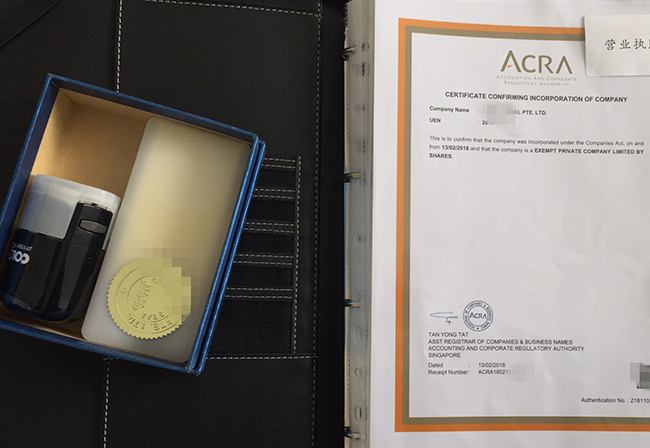
1. Ordinary Company Seal (Company Chop, Rubber Seal)
This seal is a mandatory official stamp for Singaporean businesses, available in two formats: round and rectangular, with the standard diameter being 24/26mm.
Business contracts, leasing agreements, purchase orders, official declaration documents, utility bills for water, electricity, and telecommunications, financial statements, bills of exchange and promissory notes, government grants, EP/SP permit applications, cargo express verification, and other daily operational documents.
Singapore's Companies Act Section 144(1A) explicitly stipulates that all external correspondence, bills, invoices, and notices issued by a company must clearly display the company registration number, with the ordinary seal being the most common method to comply with this provision.
The rubber seal does not possess independent legal binding force. The round seal merely signifies the company's confirmation of relevant matters, while the rectangular seal serves only as a simplified signature identifier. Without both the seal and the authorized person's signature, the document cannot take effect independently.
2. Company Seal
The steel seal is equivalent to the official seal of domestic enterprises and the corporate seal of Hong Kong companies, serving as a formal imprint with full legal validity.
According to Section 41B of Singapore's Companies Act, companies are not required to affix a steel seal when signing important legal documents such as deeds and share certificates. Documents that meet any of the following signature conditions shall have the same legal effect as those with a steel seal:
The director signs together with the company secretary;
Two directors jointly sign;
The single director signed in the presence of a third-party witness;
If a company does not require a steel seal, it can directly modify its articles of association to remove the configuration.
For high-value asset transactions, equity transfers, long-term land leases, legal instruments, and other ultra-weighted commercial documents, most enterprises still opt for steel seal authentication to enhance document credibility.
Summary of Core Differences in Company Seals Between China and Singapore
The systems differ: in China, there is only one official seal with full legal effect, while in Singapore, there are two types—rubber seals without legal effect and steel seals with legal effect.
The mandatory requirements differ: In China, a company must have a official seal engraved, while in Singapore, only a rubber seal is mandatory, with steel seals being optional.
The effective rules differ: domestic documents are effective upon affixing a company seal, while in Singapore, documents with only a seal but no authorized signature lack legal binding force.
Different Usage Logic: In China, official seals are used for all commercial documents, while in Singapore, rubber seals handle routine paperwork, and steel seals are reserved for significant legal documents.
Cross-Border Registration One-Stop Service|Singapore Skyline Business
The differences in seal regulations between China and Singapore can easily lead to non-compliant document signings by domestic operators, resulting in risks such as contract validity and government filings.
Singapore Skyline Business was established in 2013, with over a decade of dedicated service to local enterprises. Specializing in Singaporean corporate affairs, we are well-versed in Singapore's commercial laws and seal compliance regulations.
Business Coverage: Comprehensive business services including Singapore company registration, Entrepreneur Pass applications, accounting services, annual audits, corporate/personal tax filing, director information updates, and post-establishment PR identity planning.
For any inquiries regarding Singapore company registration, seal compliance, or business operations, you may seek free consultation for detailed information.
Skyline Business Consulting Pte Ltd, a Skyline Business Group affiliate, was established in Singapore in 2013. After years of growth, we are now able to provide a wider range of services, including company incorporation, immigration, education, investment, and translation. Our company is constantly striving to provide the highest quality work while also assisting our clients in achieving their objectives in an engaging way.

Contact us now


Contact us
Wechat: sgtianyu123
Tel: +65-64388369 +65-65340985
Fax: +65 6534 3785
Email: skylinetbm@gmail.com
Address: 133 New Bridge Road, #15-07, Chinatown Point, Singapore 059413
Tel: +65-64388369 +65-65340985
Fax: +65 6534 3785
Email: skylinetbm@gmail.com
Address: 133 New Bridge Road, #15-07, Chinatown Point, Singapore 059413
Copyright @ 2022 Singapore Skyline Business All rights reserved